
SRSF1 Induction Boosts Mouse Lifespan and Healthspan
A recent investigation reveals that precise, transient induction of the RNA splicing factor SRSF1 in aged mice robustly extends median lifespan and reduces frailty, without compromising cellular identity. These findings position SRSF1 as a potent, mechanistically distinct alternative to classical reprogramming factors for age reversal interventions.
Exciting Possibility for pushing frailty off into the future, and extending healthspan?
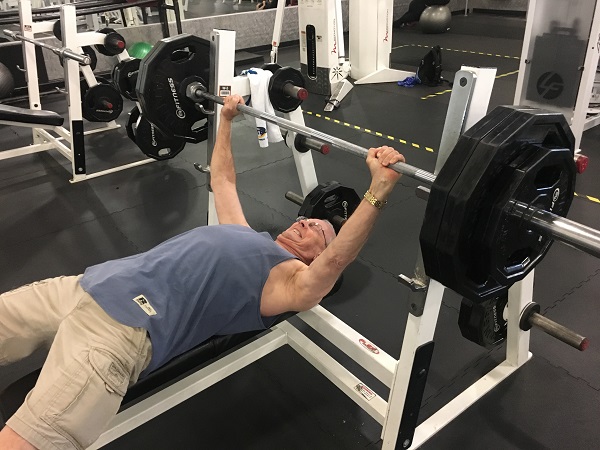
Consider how SRSF1 gets upregulated naturally: you might guess it would be exercise, and you would be correct!
Breaking Down the Scientific Terms
- SRSF1 (Serine and Arginine Rich Splicing Factor 1): This is a critical regulatory gene/protein that controls how RNA is spliced inside our cells. In recent landmark longevity studies, scientists discovered that introducing SRSF1 can act as a powerful “rejuvenation factor,” effectively rewiring old cells back to a younger transcriptomic state, reducing cellular senescence, and boosting collagen production. [1, 2]
Because the landmark Harvard/Wyss discovery of SRSF1’s 14% lifespan-extension properties in mice was just published, a direct clinical trial mapping a specific lifestyle intervention to a precise dosage of SRSF1 is still upcoming. However, molecular biology tells us exactly what controls SRSF1 in nature, and how we can naturally optimize its behavior without a pharmaceutical intervention. [1, 2]
- What Controls SRSF1 in Nature?
SRSF1 does not operate in a vacuum; its levels decline naturally with chronological age, but its expression, cellular localization, and functional activity are dynamically controlled by three primary natural mechanisms: [1]
- Upstream Signaling Kinases (SRPK1 & CLK): SRSF1 is an “SR protein,” meaning its function depends entirely on being phosphorylated (activated) by specific enzymes called SRPK1 and CLK. Without this activation, SRSF1 cannot migrate into the nucleus to splice RNA or return to the cytoplasm to facilitate protein translation. [1, 2]
- The Sirtuin Network (SIRT1): Epigenetic regulators, specifically SIRT1, interact heavily with RNA-binding proteins and splicing machinery. Sirtuin activity keeps chromatin accessible, allowing transcription factors to reach the SRSF1 gene.
- Mechanical & Metabolic Stress Sensing: Splicing factors are highly reactive to fluctuations in cellular energy status (AMPK activation), localized hypoxia, and cellular shear stress.
- How Exercise Maximally and Safely Regulates Splicing
Exercise forces the body to alter gene transcripts. When you engage in intense or prolonged physical activity, your body does not continuously leave genes turned “on.” Instead, it creates a powerful, temporary spike in metabolic stress followed by a systemic recovery phase. This mirrors the transient, pulsed expression that scientists found necessary to achieve rejuvenation without causing toxicity. [1]
Exercise activates SRSF1 and broader splicing networks via three distinct pathways:
- Pulsed Hypoxia and Mechanical Shear: Intense exercise causes transient localized tissue hypoxia and increased blood flow shear stress. This rapidly triggers upstream splicing kinases (like SRPK), forcing a temporary mobilization of SRSF1 to alter transcripts for vascular remodeling, tissue repair, and mitochondrial adaptation.
- The Sirtuin-AMPK Pulse: Vigorous exercise depletes cellular ATP, sharply activating AMPK and SIRT1. SIRT1 deacetylation acts as a permissive signal that protects the overall integrity of the splicing machinery, slowing down the age-associated loss of SRSF1 expression. [1]
- Tissue-Specific Alternative Splicing: Exercise forces skeletal muscle and cardiac tissues to actively rewrite their metabolic machinery (such as altering glucose and fatty acid transporter transcripts) to maximize metabolic fitness. This relies heavily on active, dynamic pools of SR-family splicing proteins. [1]
🏋️♂️ The Optimal Workout Protocol for Splicing Factors
To mimic the required dynamic pulse, a combination of High-Intensity Interval Training (HIIT) and Progressive Resistance Training is ideal.
- HIIT provides the acute metabolic crisis (low oxygen, high lactate) that drives rapid, temporary shifts in upstream splicing kinases.
- Resistance training provides the local mechanical tension that demands structural remodeling and collagen synthesis—the exact downstream pathways SRSF1 upregulates. [1]
- Nutritional and Dietary Regulators
Beyond exercise, you can support your body’s natural SRSF1 pathways by utilizing specific dietary strategies that target its upstream controllers:
- Sirtuin Activators / NAD+ Boosters: Since sirtuins help preserve youthful splicing patterns and transcription, ensuring robust cellular NAD+ levels supports this axis. Natural compounds that cross-activate these pathways include Resveratrol, Pterostilbene, and micro-dose Berberine (which activates AMPK to drive downstream metabolic adaptations).
- Phytochemical Splicing Modulators: Certain dietary polyphenols—such as Quercetin, Epigallocatechin gallate (EGCG) from green tea, and Luteolin—have been observed in molecular assays to subtly shift alternative splicing ratios and protect against age-related splicing decline, acting as mild natural “splicing therapeutics.”
- Intermittent Fasting / Caloric Restriction: Similar to exercise, a structured fasting window triggers an acute metabolic shift that upregulates SIRT1 and AMPK, signaling the cell to enter a maintenance and high-fidelity repair mode, which optimizes the deployment of existing splicing factors. [1]
The Bottom Line
You do not need to wait for a drug to safely leverage SRSF1. By combining intense, cyclic physical stress (exercise) with metabolic fasting windows and sirtuin support, you force your cells to transiently upregulate and deploy SRSF1 exactly the way nature intended: as a dynamic, tightly timed response that clears out cellular senescence, improves proteostatic stress, and remodels tissues for longevity. [1, 2]
To Your Greater Health and Fitness – and Longevity,
Frank
Frank Wilhelmi - Retired/consultant electronic engineer researches and reports practical strategies for optimizing health and fitness into advanced age. “I have a passion for living life to the fullest, and helping others to do the same.” A rapidly growing body of knowledge now enables us to extend our health and fitness decades beyond popular expectations.